

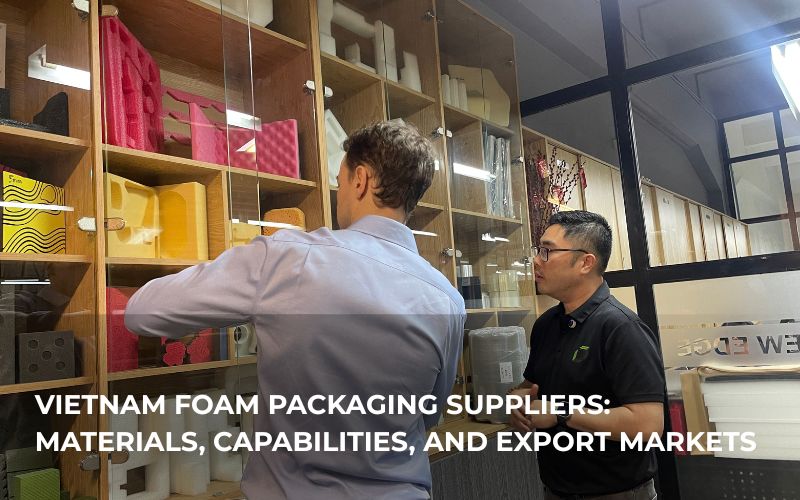
Explore Vietnam foam packaging suppliers, materials like PU, EVA, XPE, and their export capabilities in global packaging manufacturing.
Introduction: Vietnam’s Growing Role in Foam Packaging Manufacturing
Vietnam has rapidly emerged as a key player in global manufacturing, and this transformation is increasingly visible in the packaging sector. Today, Vietnam foam packaging suppliers are gaining international recognition for their ability to deliver cost-effective, high-quality solutions tailored to export markets.
To better understand how these suppliers operate in real production environments, the following factory video offers a concrete look at foam cutting processes, machinery, and packaging applications within Vietnam’s manufacturing ecosystem.
This type of production setup reflects a broader shift in Vietnam’s industrial capabilities. No longer limited to basic assembly, the country is now developing specialized expertise in foam-based protective packaging, supported by a growing network of pu foam manufacturers, eva foam manufacturer capabilities, and advanced xpe foam packaging production.
Understanding Vietnam Foam Packaging Suppliers
Vietnam’s foam packaging sector has expanded significantly over the past decade, driven by rising global demand for protective packaging and supply chain diversification strategies.
At its core, the industry is composed of a mix of local manufacturers and foreign-invested factories, many of which are export-oriented. These Vietnam foam packaging suppliers typically operate within industrial zones near major logistics hubs such as Ho Chi Minh City, Binh Duong, and Hai Phong.
Their growth is closely linked to Vietnam’s overall export performance. According to the World Bank, Vietnam’s total exports have consistently increased over the past decade, reinforcing its position as a manufacturing hub in Southeast Asia. This macroeconomic context has enabled packaging suppliers to scale production and improve their capabilities in line with international standards.
Key Foam Materials Used in Packaging Manufacturing
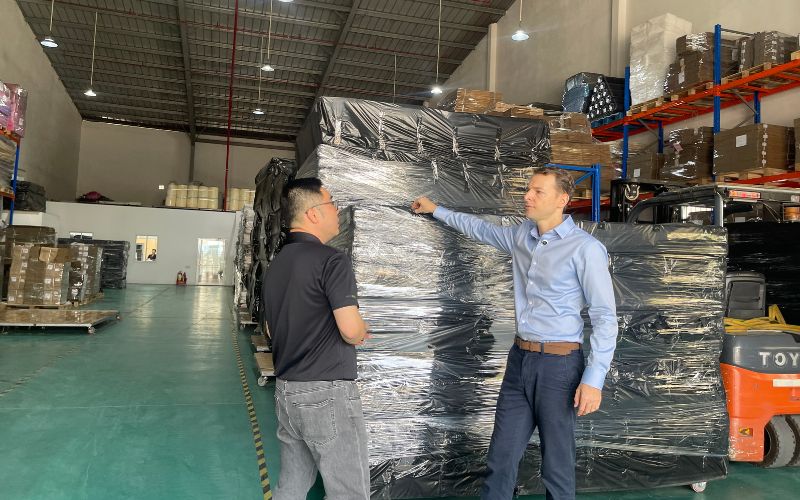
The competitiveness of Vietnamese suppliers is closely tied to their ability to work with a wide range of foam materials, each suited to different applications.
PU Foam Manufacturers and Applications
PU foam manufacturers in Vietnam focus on producing flexible and soft foam materials commonly used for cushioning and shock absorption. Polyurethane foam is particularly suitable for applications requiring delicate handling, such as electronics or medical equipment.
Its versatility allows manufacturers to adapt density and structure depending on product requirements, making it a widely used material in export packaging.
EVA Foam Manufacturer Capabilities
An Eva foam manufacturer typically produces denser and more durable foam materials. EVA foam is known for its resilience, smooth surface, and premium appearance, making it ideal for high-end packaging solutions.
In Vietnam, many factories have developed strong expertise in EVA foam processing, including precision cutting and custom insert design. This capability is particularly valued by international brands seeking both protection and aesthetic quality.
XPE Foam Packaging for Industrial Applications
XPE foam packaging is increasingly used in industrial contexts due to its closed-cell structure and excellent thermal insulation properties. This material is lightweight yet strong, offering high resistance to compression and environmental factors.
Vietnamese manufacturers are progressively integrating XPE foam into their production lines, allowing them to address more technical and demanding packaging requirements.
Manufacturing Capabilities and Process Integration
Vietnam’s foam packaging suppliers are not limited to material production. Many factories offer fully integrated manufacturing processes that combine material conversion, cutting, and assembly.
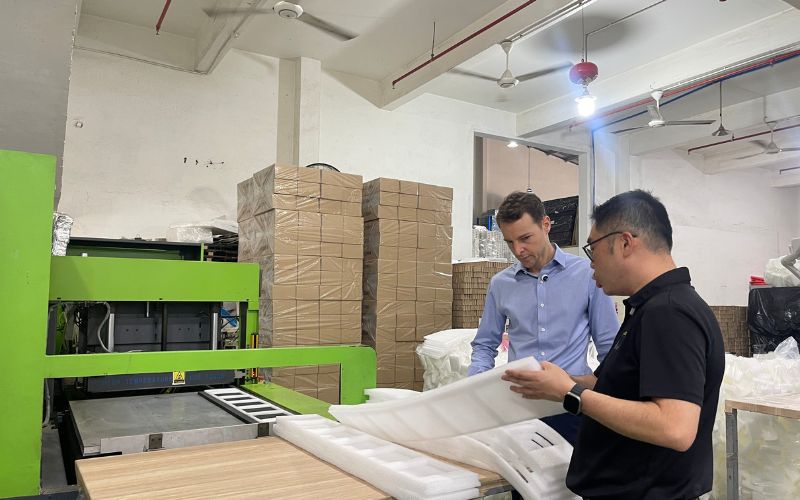
The foam manufacturing process typically begins with raw material preparation and foam production, followed by sheet cutting and shaping. Die cutting, CNC cutting, and lamination are commonly used techniques to transform foam into finished packaging components.
The video presented in the introduction illustrates how industrial foam cutting machines are used to achieve high precision and repeatability. This level of process integration allows manufacturers to deliver consistent quality across large production volumes.
In recent years, automation has become more widespread, enabling factories to improve efficiency while maintaining tight tolerances. This evolution reflects a broader trend toward higher value-added manufacturing in Vietnam.
Export Markets and Global Demand
The growth of Vietnam’s foam packaging sector is closely tied to international demand. Most Vietnam foam packaging suppliers operate with an export-oriented model, serving markets in North America, Europe, and increasingly Asia.
These markets require strict compliance with quality and environmental standards. As a result, Vietnamese manufacturers have invested in certifications and process improvements to meet international expectations.
According to data from UN Comtrade, global trade in packaging materials continues to grow steadily, driven by e-commerce expansion and industrial production. Vietnam is well positioned to capture a larger share of this market due to its competitive cost structure and improving capabilities.
Competitive Advantages of Vietnam Foam Packaging Suppliers
Vietnam offers a unique combination of advantages that make it attractive for sourcing foam packaging.
The country benefits from relatively low labor costs compared to more mature manufacturing hubs, while maintaining a skilled workforce capable of handling technical production processes. This balance allows suppliers to offer competitive pricing without sacrificing quality.
Geographically, Vietnam’s proximity to China enables easy access to raw materials and machinery, while its extensive network of trade agreements facilitates export to key markets. This strategic positioning strengthens its role in global supply chains.
Moreover, Vietnamese manufacturers are known for their flexibility. They are often able to accommodate custom designs and varying production volumes, which is a critical factor for international buyers.
Challenges and Considerations for Buyers
Despite these advantages, sourcing from Vietnam requires careful planning and supplier evaluation.
One of the main challenges lies in the variability of supplier capabilities. While some factories operate at international standards, others may have limited experience with export requirements. This makes due diligence essential when selecting a partner.
Material sourcing can also present challenges, as certain inputs are still imported. This dependency can affect lead times and pricing, particularly during periods of global supply chain disruption.
Finally, communication and technical alignment remain critical factors. Clear specifications and continuous monitoring are necessary to ensure that production meets expectations.
How to Identify Reliable Foam Packaging Suppliers in Vietnam
Selecting the right supplier involves a structured approach that combines technical evaluation and on-the-ground validation.
Buyers should begin by assessing the supplier’s experience with similar products and their ability to handle specific material requirements such as PU, EVA, or XPE foam. Reviewing production capabilities and quality control systems is also essential.
Factory visits, whether physical or virtual, provide valuable insights into operational standards. Sample validation is another key step, allowing buyers to confirm product quality before scaling production.
Working with local sourcing experts can significantly reduce risks by providing access to verified suppliers and ensuring effective communication throughout the project.
The Future of Foam Packaging in Vietnam
Vietnam’s foam packaging industry is expected to continue its upward trajectory as global demand for protective packaging grows.
Sustainability is likely to play an increasingly important role, with manufacturers exploring recyclable and environmentally friendly materials. At the same time, technological advancements in automation and digitalization will further enhance production efficiency and traceability.
As Vietnam continues to strengthen its position in global manufacturing, its foam packaging sector will become an even more integral part of international supply chains.
Conclusion: Vietnam as a Strategic Sourcing Destination
Vietnam is no longer just an alternative manufacturing location. It has become a strategic destination for companies seeking reliable and scalable packaging solutions.
With a growing ecosystem of Vietnam foam packaging suppliers, strong capabilities in materials such as PU, EVA, and XPE, and increasing alignment with global standards, the country offers a compelling value proposition for international buyers.
Understanding the structure of the industry, the foam manufacturing process, and the capabilities of individual suppliers is essential for making informed sourcing decisions. For companies looking to optimize their packaging supply chain, Vietnam represents a dynamic and rapidly evolving opportunity.