

When people say “Vietnam is cheaper,” they usually mean “the unit price on the quote is lower than in China.”
In 2026, that kind of thinking is dangerous.
Wages in Vietnam are rising, minimum wages are adjusted regularly, freight swings up and down, and customers are getting tougher on quality and social standards. On top of that, trade rules and tariffs keep shifting. A factory that looks cheap on the quotation sheet can become expensive once you add freight, defects, delays, inventory, and compliance.
So the real question is not “What’s the unit price?” but:
“What does it really cost us to get a good unit into our warehouse, on time, without creating new risks?”
That “real” number is what people usually call total cost or TCO. You don’t need a perfect financial model, but you do need a structured way to compare China, Vietnam, and any “China+1” setup you’re considering.
A Simple Way to Frame “Total Cost”

You can think of total cost per unit like this:
Start with the unit price from the factory. Then add everything you need to make that unit a reality: tools and setup, freight and customs, quality problems, extra stock and cash locked in inventory, compliance work, and management time. Then subtract any real savings you get from lower import duties or tax benefits.
In plain words:
**Total cost per unit =
- Unit price
- Tooling and setup
- Freight and duties
- Quality and failure cost
- Inventory and cash are tied up
- Compliance and audits
- Management and firefighting
− Tariff or tax savings
divided by the number of good units you actually sell.
Once you have that structure, even in a simple spreadsheet, you can compare:
- Current China supplier
- New Vietnam supplier
- A mixed model (China for some parts, Vietnam for others)
The rest of this article walks through each piece of the equation, with Vietnam in mind.
What’s Really Inside the Factory Price?
Every sourcing project starts with a quote. The mistake is to treat that number as “the cost.”
The first question is what exactly that number covers. Is the quote based on picking up at the factory gate, or does it include delivery to the export port? Does it include individual packaging, outer cartons, labels, basic testing, and export paperwork? And under what Incoterms does the quote follow? Two quotes with the same “price per piece” can have a very different scope.
Then you look at minimum order quantities and price breaks. A lower unit price at 10,000 pieces is meaningless if your realistic demand is 3,000 and you will sit on slow-moving stock for months. In Vietnam, many factories will happily offer attractive prices at high quantities, but your real cost is the combination of that price and the inventory risk you’re taking.
Tooling and setup are another blind spot. Molds, dies, jigs, fixtures, and software setup are real cash outflows. Spreading them over a fantasy volume of hundreds of thousands of units makes your spreadsheet look nice, but your P&L looks ugly. The only sensible approach is to amortize them over what you genuinely expect to sell in the first 12–24 months.
Finally, ask about yield and scrap. Every factory has a certain percentage of parts that need rework or go to scrap. Sometimes that’s already baked into the price; sometimes it appears later as “unexpected” cost or quality issues. If overtime is the “normal” way they hit capacity, expect both higher hidden cost and a higher risk of mistakes.
On paper, two factories at US$1.00 per unit look identical. In reality, one might be US$1.15 once you put all of this on the table.
Labor and Productivity: Vietnam’s Advantage (and Its Trajectory)
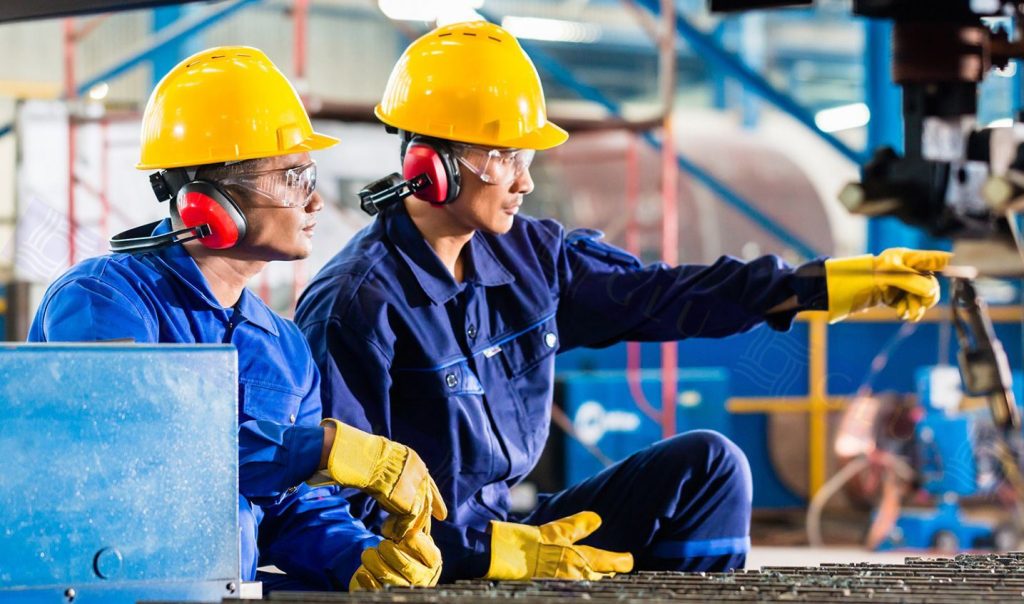
Vietnam’s cost story is still positive. A typical operator in manufacturing earns significantly less per hour than their equivalent in coastal China, while skill levels in key sectors (metalwork, plastics, furniture, packaging) have improved a lot. For labor-intensive products, this gap is a genuine advantage.
But it is not static. Minimum wages are adjusted regularly, and the direction of travel is upward. Factories in Ho Chi Minh City or Hanoi will sit at higher wage levels than plants in lower-cost regions. For a simple sewn bag or hand-assembled product, a wage increase feeds quickly into the unit price. For an automated metal-cutting process, labor is a smaller share of the cost.
So when you look at Vietnam, don’t just say “labor is cheap.” Ask: which region is this factory in, how dependent is my product on manual work, and how much overtime is built into their staffing model? Then run a simple “what if” scenario: what happens to total cost if wages rise by another 10% over the next couple of years?
You will see quickly which of your products are truly safe bets for Vietnam and which might become marginal.
Freight and Lead Time: The Price of Moving Goods
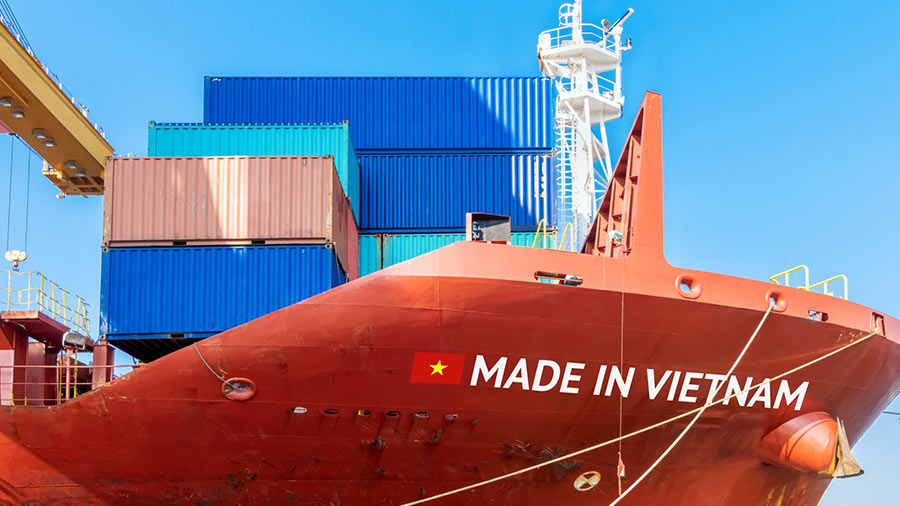
The next block is the cost of moving the product.
Inside Vietnam, there is the journey from the factory to the consolidation point to the port. Depending on whether you ship from the south (Ho Chi Minh City, Cai Mep–Thi Vai) or the north (Haiphong), trucking distance, congestion and local handling practices will differ. Those are not huge numbers per unit, but they matter when you compare factories in different regions.
Then there is the international leg: ocean freight, surcharges, and the reality of peak seasons or sudden shocks. Over the last years, everybody has learned the hard way that freight is not a steady background line in the budget. You need at least a range: a normal year level and a stressed year level, not a single “average” that never happens.
On top of that, you should be honest about how much air freight you’re likely to use. New product launches, delays with tooling, last-minute design changes – all of these generate “just this once” air shipments that cost as much as months of ocean freight in one go. Assuming that 3–5% of your volume might go by air in year one is often more realistic than assuming zero.
Finally, lead time is not free. If switching to Vietnam adds weeks to your door-to-door timeline compared with your current setup, that means more stock in transit and more safety stock in your warehouse. That is real money you tie up in inventory – we’ll come back to that.
Customs Duties and Trade Rules: Vietnam’s Structural Edge
One of Vietnam’s major advantages is its network of trade agreements with the EU, the UK, and several Asia-Pacific countries. These can translate into significantly lower import duties compared with China, especially on industrial and manufactured goods.
However, this is only useful if three things are true. First, the product is classified correctly. The customs code you use drives the duty rate; an incorrect or optimistic guess from a supplier can blow up later. Second, you know the duty rate from each origin: China, Vietnam, any other country you’re considering and as well as the trade agreements those countries have in common. Third, the product genuinely qualifies as “made in Vietnam” under the relevant rules, which often require a certain level of local processing or regional content, not just simple assembly.
In many categories, a Vietnam-made product can enter key markets at a lower or even zero duty rate once the trade agreement schedule has fully or partly phased in. That saving is structural and can outweigh a slightly higher unit price.
On the other hand, some sectors are exposed to anti-dumping duties or special measures. For those, splitting volume between China and Vietnam is sometimes a deliberate hedge rather than a pure cost play.
In your cost model, duties deserve their own lines by scenario, not a hand-waved “similar to today” assumption.
Geopolitics and Political Risk: Putting a Price on Disruption
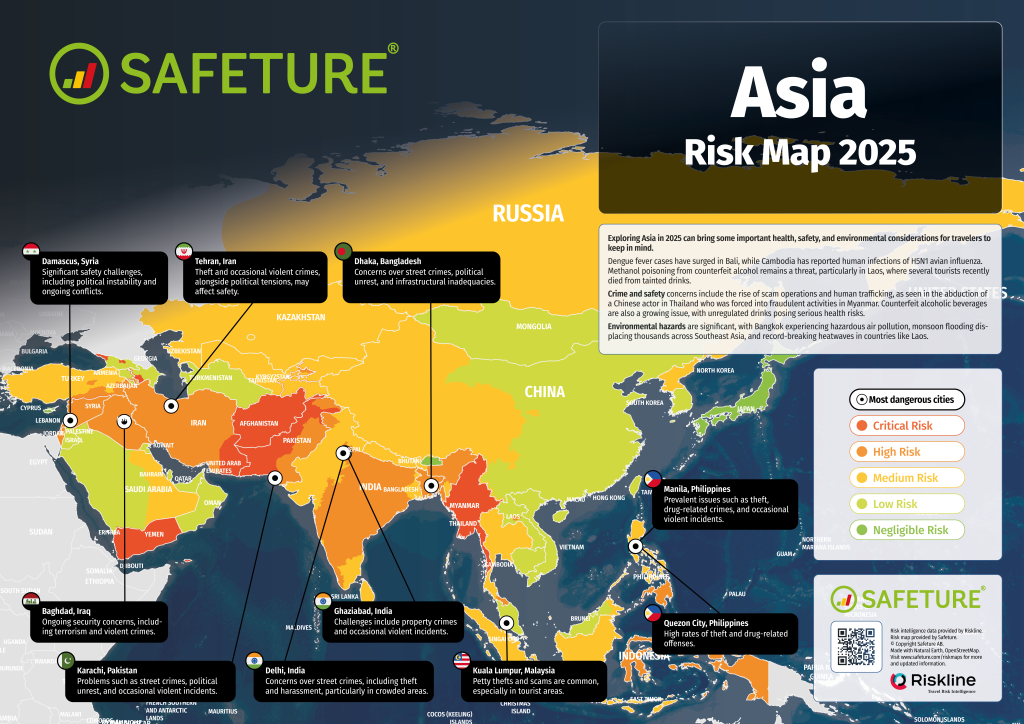
Country risk sits above every other cost line. It will never appear on a quote, but it decides whether your nice TCO model survives contact with reality. Over the next few years, it’s safe to assume ongoing US–China tension, more scrutiny on “China-heavy” supply chains, and stricter origin and due diligence rules. Vietnam and ASEAN remain attractive as relatively neutral, open manufacturing bases, but they are still exposed to regional frictions, shipping disruptions, and shifting trade preferences.
You don’t need to turn this into a fake-precise “risk cost per unit”. Treat geopolitics as a design constraint. Don’t build a plan that only works if politics stay calm; don’t put every product, tool, and supplier relationship in one country or one port. Use China, where the ecosystem is irreplaceable, use Vietnam and other ASEAN countries where production is easier to relocate, and keep at least some capacity “warm” outside your main hub so you’re not starting from zero in a crisis.
The practical test is simple: when you compare Vietnam, China, or a mixed model, don’t just ask “which is cheaper today?” Ask “which setup still works if politics get noticeably noisier?” If your answer only holds in the most optimistic scenario, your total cost view isn’t finished yet.
Quality, Rework, and the Cost of Failure
The total cost is also about the units that go wrong.
A lower unit price loses its charm if defect rates are high, inspections keep failing, or customers start returning goods. When you evaluate a Vietnam factory, you should look beyond its certification logos and understand how it manages quality day to day.
How do they monitor processes? What checks are made during production, and what happens before goods are packed? What defect levels do they consider normal for similar products, and how do they investigate and fix root causes?
On your side, you will probably use third-party inspections in the first waves of production and may keep some level of random checks later. Those services have a cost. Returns and warranty replacements have a cost. Engineering time spent debugging problems and managing change orders has a cost.
The easiest way to bring this into your thinking is to estimate a cost per failure (including product, freight, and admin) and multiply it by a realistic defect rate. It doesn’t need to be perfect. The point is to make “the cost of poor quality” visible instead of treating it as bad luck.
Inventory and Cash: The Hidden Price of a Cheaper Quote

Longer supply chains, higher minimum order quantities, and batch production all push you to hold more inventory. That is money sitting on the shelf.
When you compare China and Vietnam, or one Vietnam factory with another, look at the full inventory picture: days of stock in production, on the water, in customs, and in your warehouse. Then look at how much safety stock you need to maintain your service level, given the variability of lead times and the reliability of each supplier.
If a Vietnamese supplier requires you to order 10,000 units every time you place an order, but you only sell 5,000 per quarter, you are committing to at least half a year of stock from each order. If the product is stable and predictable, that might be acceptable. If it is seasonal or still evolving, you are taking a serious write-off risk.
From a total cost perspective, inventory is not just a balance sheet topic. Total cost of Ownership (or TCO) simply means everything it really takes to get one good unit into your warehouse – not only the factory price, but also freight, duties, quality issues, extra stock, and the time your team spends managing all of this. You can translate inventory into a cost per unit by combining the cost of the capital tied up in stock with the amount you expect to scrap or discount over time. Once you do that, some “cheap” quotes look much less attractive.
Compliance, Social and Environmental Standards

Customers, especially in Europe and large retailers globally, are raising the bar on labor conditions, safety, and environmental impact. Regulations like the EU Deforestation Regulation (EUDR) are pushing buyers to prove exactly where raw materials come from and how products are made. Vietnam is seen as a relatively acceptable location compared with some ultra-low-cost countries, but brands still have to show that their Vietnam supply chains meet these higher standards.
That means audits, certification, corrective actions and, increasingly, end-to-end traceability of farms, forests, mills, and factories. Whether you pay for audits directly or the factory absorbs them and passes them on through pricing, the cost is real. The same applies when you ask a supplier to improve working hours, upgrade safety measures, or invest in better wastewater treatment: someone pays, and usually that ends up in the total cost per unit.
From a risk perspective, these costs are often worth paying. Under rules like EUDR, a shipment blocked at the border, a retailer pausing purchase orders, or an NGO-driven scandal around labor or land use will destroy more value than a modest increase in unit cost.
So when you compare suppliers, factor in how “compliance-ready” they already are. A slightly more expensive factory that is well run, well documented, and already moving toward traceability can be cheaper in total cost and risk than a cheaper plant that will require heavy lifting to bring up to standard.
Management Time and Operational Risk
The last part of the total cost lives in people’s calendars and cultural barriers.
Launching and running a new supplier in Vietnam takes time: sourcing, factory visits, calls across time zones, translation, clarifying drawings, chasing updates, and solving unexpected issues. If you manage everything directly from your home country, your own team will carry most of that load.
Some of this is healthy and necessary. Too much of it, and the “cheap factory” becomes the most expensive line in your team’s workload.
You can think of this as an informal fee you pay in time and stress. For a serious comparison, it makes sense to estimate how many hours per month key people spend on a supplier or a region and translate that into a cost per unit or cost per million dollars of spend. That number is rarely shared in presentations, but it often explains why one region feels “harder” or “more expensive” than another.
An on-the-ground sourcing partner like FV Source in Vietnam can change that dynamic. If someone local takes care of supplier scouting, shopfloor follow-up, early-stage firefighting, and structured reporting, your internal team can focus on decisions rather than chasing basic information. The total cost of the setup, including the partner, can be lower than running everything remotely.
What This Means for Choosing Vietnam, China, or a Mix

Once you put all of these elements into one view, some patterns usually emerge:
- In some product lines, Vietnam clearly wins on total cost. Even if the unit price is similar to China, lower duties and better labor economics win the day.
- In others, the advantage is marginal, and the risk and complexity of moving a complex, validated supply chain are not worth it. A phased move, or a dual-sourcing model with China and Vietnam both active, makes more sense.
- For some portfolios, a regional mix is optimal: Vietnam for certain processes or product families, another ASEAN country for others, and perhaps a core of China-based production where the ecosystem is hard to match.
The point is simple: once total cost is on the table, arguments over one or two cents of unit price quickly feel small.