

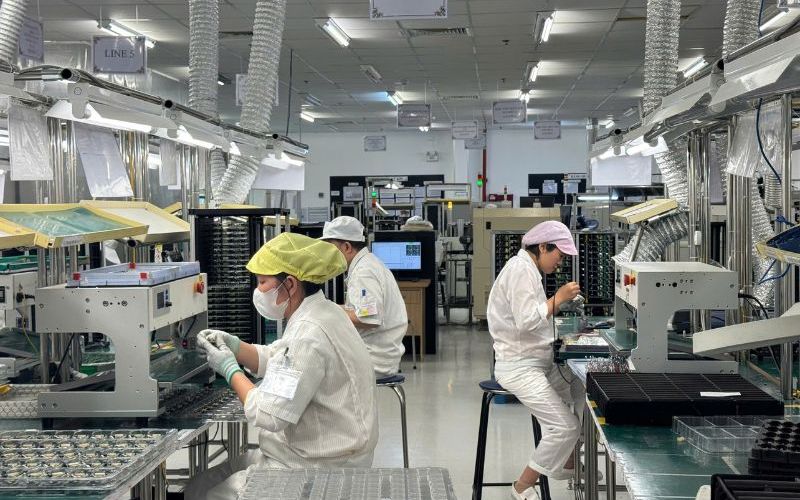
Contract manufacturing becomes more demanding when the product is a complex piece of industrial equipment. Unlike simple components or standardized products, these projects often involve tight tolerances, multiple materials, custom specifications, engineering changes, assembly, testing, and detailed documentation. A supplier may therefore need to contribute much more than production capacity.
This raises an important question for international buyers: Can Vietnam support contract manufacturing for complex industrial equipment, and how should buyers assess a potential supplier?
Vietnam can be a suitable option for complex industrial equipment when local manufacturing capabilities match the product’s technical requirements. Projects involving machining, metal fabrication, industrial assembly, and repeatable production may be worth evaluating, particularly for companies seeking to diversify their manufacturing base in Asia.
What Makes Complex Industrial Equipment Different?
The complexity of industrial equipment usually comes from the combination of several manufacturing and engineering requirements rather than from the size of the product itself.
A single piece of equipment may contain machined parts, fabricated structures, electrical components, purchased parts, and multiple sub-assemblies. Each element has to meet its own specification while also working correctly within the finished system.
Tight dimensional tolerances can add another layer of difficulty. A small variation in one component may affect assembly or the performance of the final product. The same applies to material specifications, surface treatment, welding quality, or the positioning of critical components.
Engineering requirements can also change during production. A buyer may modify a drawing, replace a component, or adjust a specification after receiving feedback from the factory. The manufacturer needs a clear process for managing these changes so that outdated information does not enter production.
For this reason, contract manufacturing for complex equipment typically covers a much wider process:
- Technical drawing and specification review
- Material and component sourcing
- CNC machining and fabrication
- Welding and other production processes
- Mechanical or electrical assembly
- Inspection and testing
- Documentation and traceability
The supplier is therefore part of a broader technical process, not simply a factory producing parts to order.
This video explores key considerations for evaluating manufacturing capabilities and selecting the right partner for complex industrial equipment.
Vietnam’s Capabilities for Complex Industrial Manufacturing
Vietnam has a diverse manufacturing base that can support many of these activities. Its industrial sector includes manufacturers working in precision machining, metal fabrication, welding, electrical assembly, industrial components, and equipment assembly.
For buyers, this creates opportunities to source different stages of a complex manufacturing project locally. Depending on the product, a Vietnamese manufacturer may be able to produce individual components, complete sub-assemblies, or manage a larger portion of the finished equipment.
Precision machining is particularly relevant for industrial products that require controlled dimensions and repeatable production. CNC equipment can be used for components made from materials such as steel, aluminum, and other industrial metals. Fabrication and welding capabilities are also widely relevant to machinery frames, enclosures, structural parts, and other fabricated assemblies.
The supporting supplier network matters as well. Complex equipment rarely consists entirely of parts produced under one roof. A manufacturer may rely on specialized suppliers for materials, electrical components, surface treatment, fasteners, or other purchased parts. The ability to coordinate these suppliers can therefore be just as important as the factory’s own production equipment.
However, Vietnam should not be viewed as a single, uniform manufacturing ecosystem. Capabilities differ considerably between suppliers. One factory may have strong machining capacity but limited engineering support, while another may be experienced in assembly but rely heavily on external suppliers for precision components.
This is why the next step is not simply asking whether Vietnam can manufacture a particular product. The more useful question is whether a specific Vietnamese supplier can meet the technical requirements of that particular project.
How to Evaluate a Vietnamese Contract Manufacturer
For complex industrial equipment, supplier evaluation should begin with technical capability rather than price.
Engineering and technical capability
A capable manufacturer should be able to understand technical drawings, specifications, bills of materials, tolerances, and production requirements. Strong engineering teams can also identify potential manufacturing issues before production begins.
Ask whether the supplier can participate in technical discussions, suggest practical manufacturing solutions, and manage engineering changes when specifications are updated.
Production capability
The factory’s machinery and processes need to match the product requirements. This may include CNC machining, fabrication, welding, surface treatment, assembly, or other specialized processes.
Equipment lists alone are not enough. Buyers should also consider production capacity, maintenance practices, process consistency, and experience with products of similar complexity.
Quality management
Quality control becomes increasingly important as the number of components and production steps increases.
A buyer should examine how the supplier handles incoming materials, in-process inspection, final inspection, calibration, non-conformities, and corrective actions. Depending on the project, certifications and documented quality procedures may also be relevant.
Supply-chain control
The manufacturer may not produce every component internally. Buyers should understand which processes are subcontracted, how external suppliers are selected, and how incoming components are inspected.
This is particularly important when a critical part comes from a third party. A factory’s ability to control its supplier network can have a direct effect on the quality and reliability of the final product.
Testing and validation
Complex equipment should not be evaluated only by looking at individual components. The finished assembly may need functional, dimensional, electrical, pressure, or performance testing depending on its application.
Before production begins, buyers should establish what needs to be tested, which standards apply, and what documentation will be provided.
Communication and project management
Technical capability is difficult to use effectively without clear communication. Buyers should assess how the supplier handles drawings, specifications, production updates, questions, engineering changes, and problems.
Language capability matters, but communication discipline matters just as much. A supplier that documents decisions and escalates problems early can reduce the risk of costly misunderstandings.
These capabilities can be assessed through a combination of factory audits, previous-project reviews, prototype or pilot production, and clearly defined technical and quality agreements. Rather than relying on a presentation or capability brochure, buyers should look for evidence that the supplier has successfully handled comparable work.
Managing Cost and Manufacturing Risks
Complex equipment introduces risks that are less visible in a simple unit-price comparison.
A specification can be misunderstood before production begins. A component from a subcontractor may not meet the required tolerance. An engineering change can be missed on the production floor. Poor traceability can then make it difficult to identify where a problem originated.
A structured quality process helps address these issues. Buyers can define inspection points, approval procedures, material requirements, testing protocols, and change-control processes before production starts. For products with critical components, serial or batch-level traceability may also be necessary.
Cost needs to be considered in the same way.
The quoted unit price is only one part of the manufacturing equation. Depending on the project, the total cost can include engineering support, tooling, materials, component sourcing, quality inspection, testing, logistics, inventory, and potential rework.
For example, a lower-cost supplier may appear attractive at the quotation stage but create additional expenses through repeated quality issues or poor production planning. A manufacturer with a higher initial price may produce a more predictable total cost if its processes are stable and its technical requirements are understood from the beginning.
For complex industrial equipment, therefore, cost should be evaluated together with manufacturing reliability and project requirements rather than in isolation.
When Does Contract Manufacturing in Vietnam Make Sense?
Vietnam can be considered for complex industrial equipment when the project aligns with the capabilities available in the local manufacturing ecosystem and the buyer is prepared to conduct proper supplier qualification.
It may be particularly relevant for products involving substantial mechanical manufacturing, metal fabrication, machining, industrial assembly, or repeatable production. It can also be an option for companies looking to diversify their manufacturing footprint and build an additional sourcing base in Asia.
At the same time, some projects require closer assessment. Equipment involving highly specialized technologies, extremely demanding tolerances, proprietary manufacturing processes, or highly specific certification requirements may need a more detailed feasibility review before production is transferred.
The key is to assess the fit between the product, the manufacturing process, and the supplier.
For international buyers, the decision should therefore go beyond asking whether Vietnam is a lower-cost manufacturing location. A more useful assessment considers whether the supplier has the engineering knowledge, production equipment, quality systems, supply-chain control, testing capability, and communication processes required by the project.
Conclusion
Contract manufacturing in Vietnam can be an option for complex industrial equipment, but suitability depends on the product’s technical requirements and the capabilities of the individual manufacturer.
International buyers should verify these capabilities through technical reviews, factory audits, previous-project assessments, and pilot production where appropriate. The objective is to find a manufacturing partner that can meet the required specifications and maintain consistent quality, delivery, and process control over time.