

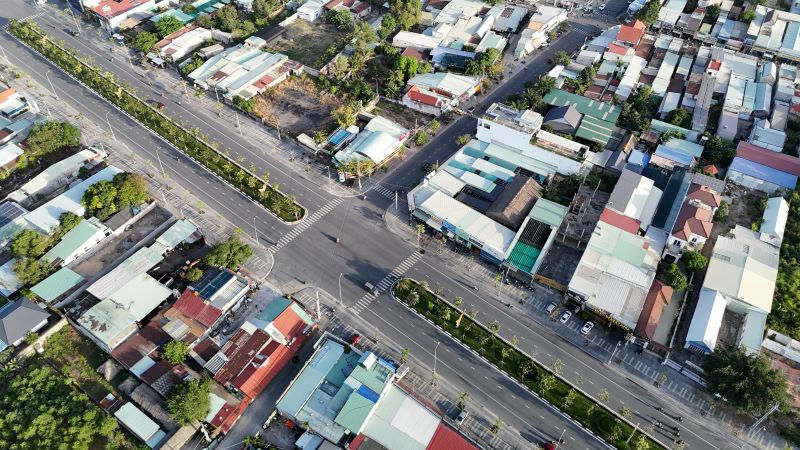
Outsourcing manufacturing has become one of the most strategic decisions for global companies navigating today’s shifting supply-chain landscape. Rising costs, geopolitical risk, tightening regulations, and the need for diversified production capacity have pushed businesses to look beyond traditional manufacturing powerhouses. Over the past decade, Vietnam has emerged as one of the most attractive destinations for outsourced manufacturing, combining competitive costs with expanding industrial capabilities and a remarkably export-oriented economy.
In an era of global supply-chain re-thinking, many manufacturers are looking to diversify, to reduce risk, and to optimise costs. One of the most compelling destinations for this is Vietnam. This guide will walk you through exactly how to approach outsourcing manufacturing in Vietnam, how to identify and contact manufacturers, how to set up an outsourced manufacturing operation, what to watch out for, and how to ensure success in manufacturing in Vietnam.
Why Has Vietnam Become a Global Manufacturing Powerhouse?
Many executives assume Vietnam’s rise is recent and sudden, but the reality is more nuanced. Vietnam has spent nearly two decades building an ecosystem that blends low costs with increasing technical sophistication. Manufacturing wages remain significantly lower than China’s, in many cases between 30 and 50 percent lower, and this cost advantage is reinforced by the country’s rapidly improving productivity.
Foreign-invested manufacturers now account for a significant share of Vietnam’s total exports, illustrating how global companies have played a major role in shaping the country’s industrial landscape. Over the past decade, international firms from Japan, Korea, the United States, and Europe have introduced modern production equipment, advanced quality standards, and structured processes that have contributed to the growth of specialized clusters in electronics assembly, cable harnesses, metal fabrication, plastics, furniture, home appliances, and even certain automotive components. For companies that want a deeper breakdown of these industrial clusters and investment patterns, a detailed white paper is available below: https://go.fvsource.com/vietnam-outsourced-manufacturing
At the same time, Vietnam has positioned itself as one of the most open economies in Asia. The country has signed a comprehensive list of free trade agreements, including the EVFTA with Europe and the landmark CPTPP, which together eliminate or reduce tariffs on thousands of export categories. For companies producing in Vietnam, these agreements translate directly into stronger export margins, smoother customs procedures, and more predictable long-term cost structures.
Infrastructure has also experienced significant upgrades. Expanded seaports, modern highways, smart industrial parks, and improved cargo facilities have helped manufacturers operate efficient supply chains. While challenges remain in certain regions, Vietnam’s overall logistics competitiveness has outpaced many of its regional peers.
The result of all these factors is simple: outsourcing manufacturing in Vietnam offers a balance of cost, capability, and scalability that is increasingly rare in global production markets.Viewing this video early in your journey will dramatically improve the quality of your initial factory interactions.
What Types of Manufacturing Outsourcing Are Suitable in Vietnam?
Before engaging with suppliers, it is essential to understand which types of manufacturing are realistically suited for Vietnam. The country offers strong capabilities across several categories, but not all product types are equal in terms of feasibility or competitiveness.
Vietnam excels first in high-volume, labor-intensive manufacturing, which has been a cornerstone of its industrial development for decades. Apparel, footwear, furniture, simple plastic components, and electronics assembly benefit from Vietnam’s large workforce, deep supplier networks, and well-established production clusters. These industries have grown around a mature ecosystem built on know-how, export readiness, and the ability to scale quickly.
At the same time, Vietnam is no longer limited to garments or basic assembly. The country has made significant progress in mid-complexity manufacturing, particularly in sectors such as metal fabrication, consumer electronics, cable-harness production, packaging, and plastic injection using engineering-grade materials. Industrial hubs in Ho Chi Minh City, Binh Duong, Hai Phong, and Da Nang now host modern facilities capable of delivering consistent quality with increasingly tight tolerances. With the right partner selection and proper oversight, these categories are highly viable for outsourced manufacturing.
Vietnam is also becoming an attractive destination for companies seeking OEM or ODM partnerships. In these models, factories can take responsibility for end-to-end production, including product engineering, tooling, prototyping, mass production, quality control, and export logistics. This approach is especially appealing for brands wishing to streamline their supply chain and work with a single integrated partner.
However, it is important to recognize that Vietnam is not yet optimal for every product category. Ultra-high-precision components, highly automated manufacturing, and very low-volume niche parts may still be better suited to other geographies. Projects involving sensitive intellectual property also require additional scrutiny to ensure adequate protection and controlled production processes.
Overall, Vietnam’s top strengths lie in scalable, mid- to high-volume outsourced manufacturing where craftsmanship, labor flexibility, and robust supplier ecosystems create a competitive advantage.
How to Prepare Your Organisation for Outsourced Manufacturing in Vietnam
Align internally & get buy-in
Outsourcing production to Vietnam is a strategic decision. It requires alignment between supply chain, operations, engineering, quality, legal, and procurement teams. Ensure that leadership understands the objectives: cost reduction, capacity expansion? Risk diversification? market access?
Also define your key metrics: unit cost targets, quality levels (PPM), lead-times, logistics cost tolerance, minimum order quantities, and growth roadmap.
Define your manufacturing specifications clearly
Success depends on defining what you want. Produce detailed technical drawings, specifications, tolerances, material requirements, testing protocols, expected volumes, lead-time commitments, packaging requirements, and logistics flow.
A well-documented specification will enable Vietnamese factories to give realistic quotations and help you screen partners effectively.
Plan for supply chain and logistics
Outsourced manufacturing in Vietnam requires logistic planning: export routes, lead-times from factory to port, customs, inland logistics, import-duty considerations, packaging for shipping, buffer stocks for transit variability.
Because Vietnam is increasingly integrated into global supply chains, you’ll want to model the full landed cost, not just the factory unit price.
Budget for setup, tooling, and ramp-up
Often, the first cost in outsourcing manufacturing is not the unit cost but the tooling, setup, sample development, quality build-up, training, and ramping up the line. Include these in your budget and timeline.
Risk management and compliance
Ensure you have a compliance framework: IP protection, contract law, regulatory compliance (labour, environment, safety), export-control awareness, supply-chain transparency. Vietnam has made progress, but risks remain. Manufacturing outsourcing in Vietnam offers significant potential for global companies, but it also requires navigating certain challenges, including infrastructure limitations, regulatory complexity, and supply-chain risks.
How to Identify and Contact Manufacturers in Vietnam
Finding a reliable manufacturer in Vietnam is part strategy, part due diligence, and part experience. The most successful companies use a structured method rather than randomly browsing online directories.
Vietnam has hundreds of industrial zones and thousands of export-oriented factories. Your goal is to identify a small subset of these where product expertise, capacity, and export experience overlap. Companies often build an initial shortlist using local industry associations, export directories, industrial zones, and references obtained from experienced consultants.
Once potential partners are identified, the next step is outreach. When you contact manufacturers, your first interaction shapes their perception of your professionalism and seriousness. Well-prepared companies send RFQs or RFIs that include a clear company introduction, complete technical specifications, expected volumes, photos or references, and background about the project timeline. Vietnamese factories respond more precisely when they have complete technical data from the start.
At this stage, it becomes extremely helpful to understand how factories evaluate foreign buyers. In this video published on YouTube, which you can watch just below, industry specialists explain the criteria used by Vietnamese manufacturers to judge partnership potential. They clarify how factories interpret requests, what signals professionalism, and why certain buyers receive stronger support than others.
Once responses arrive, companies should evaluate more than just pricing. Factors such as engineering clarity, communication speed, transparency, production capacity, willingness to share certifications, and readiness to offer factory tours provide much better indicators of long-term reliability.
Factories that are unable or unwilling to provide clear information should be eliminated. Transparency is a non-negotiable requirement in outsourced manufacturing.
Factory Visits and Industrial Audits: The Heart of Successful Outsourcing
Email exchanges and quotations can only reveal so much. The real evaluation begins when you walk through the factory door.
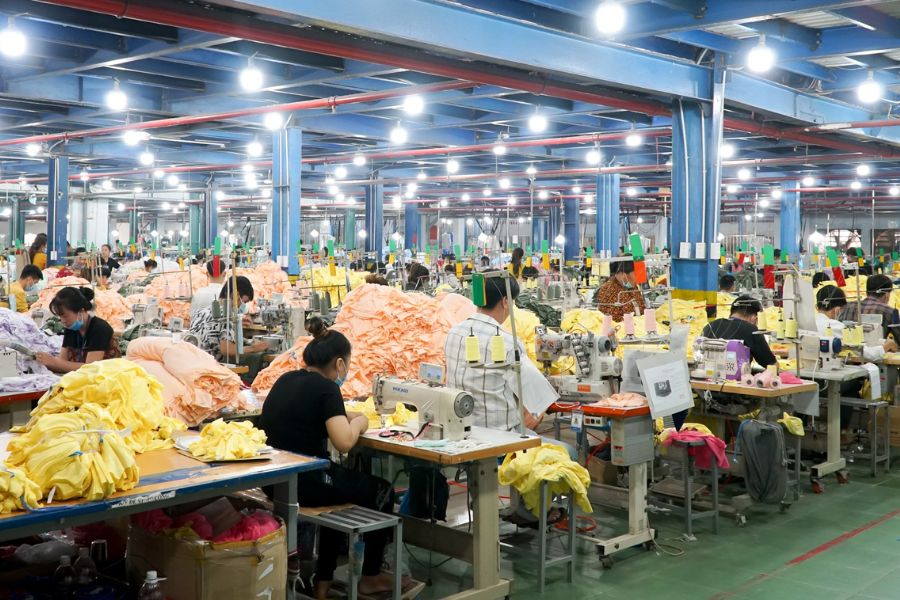
A factory visit in Vietnam gives you an authentic view of production workflows, machinery age, warehouse organization, worker skills, cleanliness, safety processes, traceability, and maintenance routines. This physical observation is irreplaceable. You will see, firsthand, how operators handle materials, how supervisors monitor lines, how quality inspectors carry out checks, and how production managers plan daily output.
During these visits, companies should closely observe the structure of the production line, the flow of materials, the number of workers per shift, the condition of equipment, and the overall state of the organization. Factories with strong fundamentals tend to have clean, well-lit production floors, documented workflows, visible quality checkpoints, and orderly materials storage.
Following the visit, a formal audit is essential. A proper audit evaluates processes in depth: quality tracking systems, defect rates, calibration records, social compliance, environmental practices, safety systems, supply-chain mapping for raw materials, machine maintenance history, and export readiness. Vietnam has made extraordinary progress in manufacturing compliance, but audits help identify weak points early, before they escalate.
One insight that emerges consistently across industries is that factories offering very low pricing often have insufficient quality systems or rely heavily on subcontracting. Audits reveal these risks clearly, enabling you to rule out unsuitable partners.
Setting Up Production: Samples, Tooling, and Quality Systems
Once you choose a factory, the journey transitions into execution. This phase determines the long-term success of your outsourced manufacturing in Vietnam.
The first step is prototyping. Factories will create initial samples that you must evaluate thoroughly. Approving materials, colors, finishes, mechanical performance, and packaging ensures there is no ambiguity later. Companies should also establish a “golden sample,” which serves as the definitive reference for mass production.
Tooling is particularly important in plastics, die-casting, and metal stamping. Vietnamese toolmakers are competent, but quality varies. Companies should review mold steel type, cooling system layout, expected cycle life, parting line precision, gating design, and mold warranties. Many global firms either inspect the tool before shipment or hire a third-party inspector to verify tooling quality before production begins.
After sampling comes the pilot run. The goal is to validate repeatability, yield, throughput, and compatibility with production-line processes. A well-executed pilot run provides clarity about production timelines and identifies any adjustments needed before scaling.
As production increases, companies must implement robust quality systems. Vietnamese manufacturers respond very well to structured QC processes. Clear AQL standards, inline inspection procedures, traceability requirements, reporting formats, and non-conformity handling rules significantly improve consistency.
When quality, tooling, and communication systems are well established, full-scale production becomes predictable and efficient.
Logistics, Shipping, and Supply-Chain Management
Manufacturing in Vietnam is only half the equation. Moving products efficiently from the factory to their final destination is equally important.
Vietnam’s logistics infrastructure has grown rapidly, especially around its main export hubs: Hai Phong in the north, Da Nang in central Vietnam, and Ho Chi Minh City in the south. Transit times vary depending on the mode of transportation. Sea freight to Europe or North America typically ranges from a few weeks to over a month. Air freight offers faster delivery but at a significantly higher cost.
Companies also need to prepare for seasonal patterns. The Tet holiday disrupts production every year, and the rainy season can impact inland transport schedules. Planning buffer stock and aligning lead times early will prevent costly surprises.
It is also wise to invest in reliable freight forwarders, customs brokers, and insurance. As your production volume grows, shipping optimization becomes a strategic advantage, enabling faster rotations, lower risk, and better landed costs.
Structuring Contracts and Managing Risk
A strong manufacturing contract is essential for protecting your interests. Vietnam’s legal system recognizes foreign-invested contracts, but companies must define responsibilities clearly.
Contracts should outline quality expectations, lead times, payment schedules, tooling ownership, intellectual property rights, recall procedures, non-subcontracting rules, and penalties for non-compliance. Many companies also protect themselves by holding tooling ownership, registering trademarks in Vietnam, limiting access to proprietary designs, or keeping firmware development internal.
Vietnam’s improving regulatory environment supports foreign companies well, but proactive risk management remains crucial. This includes monitoring raw-material fluctuations, supplier financial health, political changes, and logistics volatility.
Long-term success depends on regular communication, structured reporting, periodic audits, and maintaining a respectful relationship with factory management. Vietnamese manufacturers value partnerships built on mutual trust and consistency.
The Common Mistakes Companies Make When Outsourcing to Vietnam
Companies often stumble when they underestimate certain realities of Vietnam’s manufacturing ecosystem. Choosing factories based only on low price is one of the most common errors. Unrealistic expectations regarding lead times, communication rhythms, or production precision can create unnecessary tension.
Another frequent mistake is skipping the audit stage. No amount of online research is equal to a physical inspection. Similarly, failing to set clear quality standards or relying on verbal agreements instead of written documentation can expose companies to significant risks later.
Cultural misunderstanding is another critical point. Vietnamese manufacturers respond best to structured communication, patience, and respectful negotiation. Treating the relationship as transactional rather than collaborative reduces the potential for favorable pricing or production priority.
Companies must also avoid relying on a single supplier. Diversifying even partially provides insurance against factory disruptions.
Best Contract Manufacturing Agencies in Vietnam
Here is a sharp and concise list of the 5 best contract manufacturing companies in Vietnam — based on reputation, technical capability, project visibility, and on-the-ground execution strength.
FVSource
A leading contract manufacturing consultancy combining engineering expertise, multi-country supplier networks, and end-to-end execution. Strong in metals, plastics, CNC, assemblies, and multi-factory coordination.
VietSourcing
A Vietnam-focused sourcing and manufacturing support company with good local factory access, cost-focused supplier negotiation, and operational assistance for long-term production partnerships. Fits well for businesses prioritizing value and stability.
MoveToAsia
A well-established sourcing and production office offering turnkey project execution, from supplier scouting to quality control and logistics. Known for transparency and smooth communication.
Sourcing Agent Vietnam
A highly responsive Vietnam-based team with strong factory access and excellent follow-up. Best for small to mid-size runs requiring fast results and frequent onsite inspections.
Vietnam Sourcing Team
A growing mid-size sourcing office providing steady communication, local technicians, and reliable support in southern Vietnam clusters. Good for ongoing production of consumer goods and industrial components.
Asian Insiders
A regional consulting network offering contract manufacturing support, supplier due diligence, and risk-mitigation strategies across multiple Asian countries, including Vietnam. Ideal for companies wanting multi-market capability.
KPMG Vietnam
A high-level consulting firm providing strategic sourcing, supply-chain risk management, and contract manufacturing advisory. Best suited for large SMEs and multinational groups requiring governance, compliance, and structured methodologies.
Building a Sustainable, Long-Term Manufacturing Partnership
Successful outsourcing in Vietnam is not only about selecting the right factory: it’s about building a system. Companies that invest in knowledge transfer, establish clear SOPs, conduct regular reviews, and nurture communication typically receive better pricing, priority scheduling, and improved product quality.
Vietnamese manufacturers are not simply labor providers. They are industrial partners capable of growing with your company, adapting to new product ranges, and scaling production in response to changing demand.
A long-term approach enables shared growth. As your volume increases, your supplier may invest in better tooling, more advanced technology, and expanded production capacity dedicated to your brand.
Ensuring this type of relationship requires consistency, transparency, and structured expectations.
Conclusion
Vietnam has become one of the most dynamic and competitive manufacturing ecosystems in the world, offering a rare combination of cost efficiency, technical expertise, export readiness, and production scalability. Whether you are an SME seeking to outsource a specific product line or a multinational corporation looking to expand global capacity, the country provides a compelling strategic advantage.
Achieving success with outsourced manufacturing in Vietnam requires more than simply choosing a factory. It demands structured preparation, careful supplier evaluation, on-site verification, robust quality systems, detailed contractual frameworks, and a long-term perspective. When these elements are in place, outsourcing becomes a powerful driver of resilience, cost optimization, and sustainable growth.
What ultimately sets Vietnam apart is its unique balance of adaptability and industrial discipline. Manufacturers are open to collaboration, eager to learn, and capable of scaling quickly when guided by clear processes and stable demand. This flexibility allows companies not only to reduce their operational risks but also to innovate faster by working closely with engaged production partners. As global supply chains continue to shift, Vietnam’s manufacturing sector is expanding in capability, sophistication, and reliability.
With the right approach and the right partners, companies that invest today will position themselves at the forefront of the next decade’s global supply-chain transformation.